Loading...
Serving Benbrook, TX and surrounding areas. (817) 438-1248
Raw or failing concrete holds back every plan you have for the space. We test for moisture, address the slab, and apply a finish that lasts through Benbrook's wet springs and dry summers.
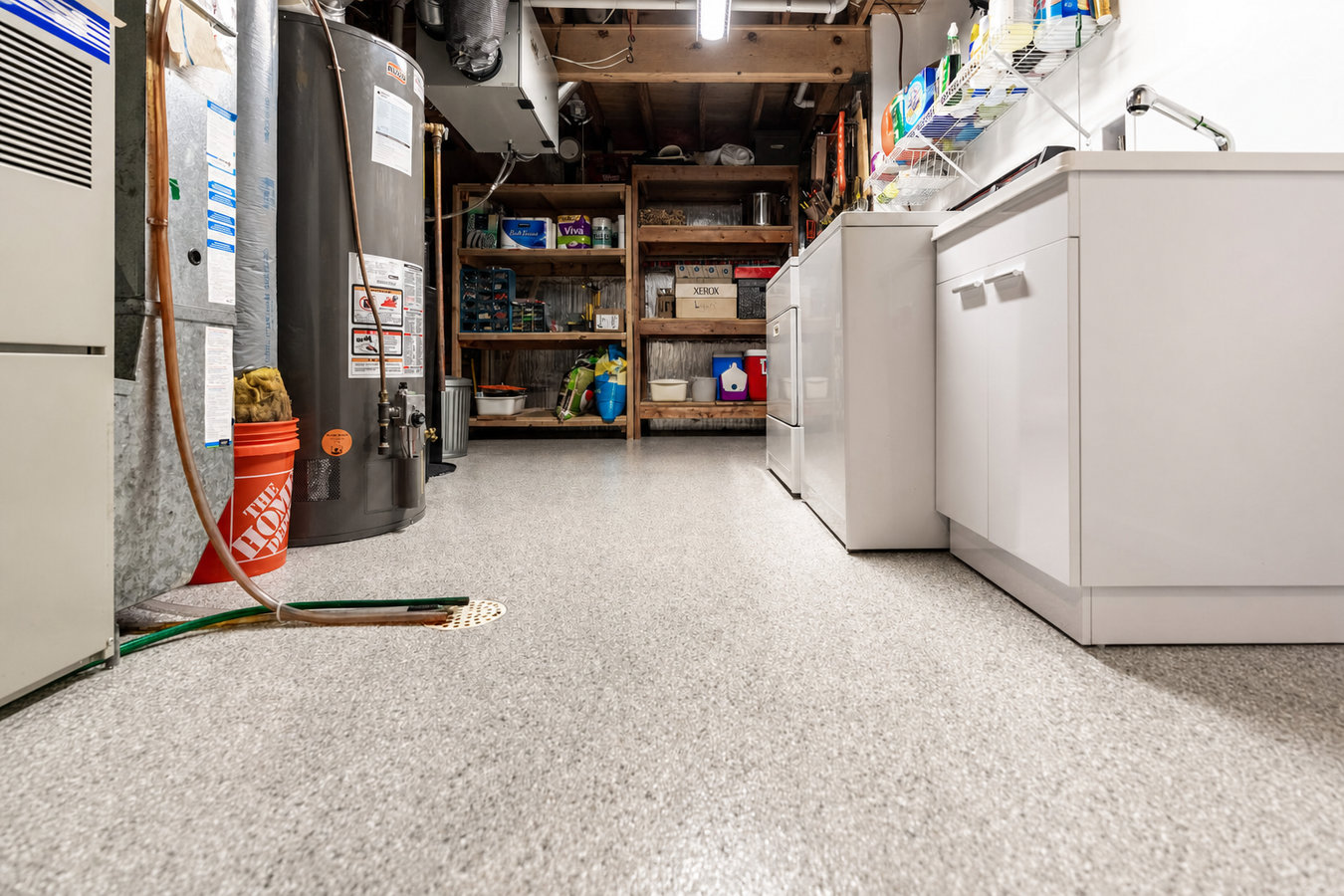
Basement flooring in Benbrook, TX means applying a finished surface over your existing concrete slab - options include epoxy and polyurea coatings, polished concrete, and decorative overlays, with most projects completed in one to two days plus curing time.
In Benbrook, the biggest factor in whether a basement floor succeeds or fails is what happens before the finish goes down. The area's clay-heavy soil pushes moisture through slabs in ways that are not always visible - and a coating applied over a moisture-heavy or unstable slab will peel, bubble, or crack within a year. We test every slab before we quote and address what needs fixing before we apply anything. If you are converting your basement into usable living space, our concrete grinding and surface preparation service is often the first step in the process.
Whether you are finishing the space for a home gym, workshop, extra bedroom, or just want a clean and durable floor that stops shedding dust, we will recommend the right system after looking at your actual slab - not over the phone.
Bare, unsealed concrete sheds a fine dust called efflorescence - a powdery residue that settles on everything in the space. If you notice a gritty film on boxes, appliances, or anything stored on the floor, your slab is telling you it needs to be sealed or coated. This is especially common in older Benbrook homes where the original slab has never been treated.
New or widening cracks in your basement floor are a sign that the clay soil beneath your home has been moving - a very common pattern in Tarrant County. Small hairline cracks are usually cosmetic and can be filled as part of a flooring project. If cracks have grown noticeably wider or longer over a single season, it is worth having a contractor look before you invest in a new floor.
If your basement floor feels slightly wet to the touch after a rainstorm, or if the space has a persistent musty smell, moisture is working its way up through the slab. Benbrook's clay soils hold water for a long time after rain, and that moisture has to go somewhere. A properly sealed and coated floor creates a barrier that stops this from happening.
If you are turning your basement into a home gym, workshop, playroom, or extra living space, a raw concrete floor will undermine the whole project. Rough, stained, or uneven concrete is uncomfortable underfoot and hard to keep clean. A finished floor - coated, polished, or overlaid - is what makes the space actually usable and worth the investment you are putting into it.
The right finish depends on your slab's condition and how you plan to use the space. Epoxy and polyurea coatings are the most popular choice for basements - they are durable, available in a range of colors, and handle the imperfections common in older Benbrook slabs better than thinner finishes. For slabs in good condition with minor surface roughness, polished concrete is a clean, low-profile option that keeps the floor height exactly where it is. If you are looking to protect a finished basement floor over the long term, pairing any of these finishes with our concrete sealing service adds a durable top layer that handles foot traffic and moisture exposure.
Decorative overlays are available for slabs that are too stained or rough for a standard coating but where tearing out the concrete is not practical. These systems apply a fresh surface layer over the existing slab, giving you a clean starting point and flexibility in the finished appearance. All of our basement flooring work starts with surface preparation - grinding, crack repair, and moisture testing - because that foundation is what determines how long anything we apply on top will actually last.
Great for basements where you want color options, a thick protective layer, or a surface that hides slab imperfections.
Best when the slab is in good condition and you want a clean, low-maintenance, low-profile finish.
A practical option for covering heavily stained or rough slabs with a fresh surface layer and customizable appearance.
Required when moisture vapor testing shows elevated readings - it is the foundation step that makes everything else hold.
Benbrook averages around 35 inches of rain per year, with the heaviest rainfall in May and October. The clay soil that runs through Tarrant County holds that water for a long time after a storm - and it pushes up through concrete slabs even when the basement looks and feels dry. This is not a problem unique to a few homes. It is a baseline condition in this area that affects how any flooring project needs to be approached. A moisture test before installation is not optional here - it is the single most important step in protecting your investment. Homes near lower-lying areas of the city or near Lake Benbrook tend to see the most moisture activity. We have worked on slabs throughout Benbrook and bring moisture testing to every estimate, regardless of whether the homeowner has noticed a problem. Our clients in Burleson deal with similar clay-soil and seasonal moisture conditions, and we apply the same testing-first process there.
A large portion of Benbrook's housing stock was built between the 1970s and 1990s. Those slabs are 30 to 50 years old - they have accumulated stains, minor settling cracks, and surface roughness that requires more prep work than a newer pour. That extra prep adds time and cost, but it is the step that separates a floor that lasts from one that fails within two years. We tell clients this upfront after inspecting the floor, not after the job has started. Homeowners in Mansfield with similar older-era slabs find the same prep-first approach produces better long-term results.
When you reach out, we will ask the size of the space, how you plan to use it, and whether you have noticed any moisture or cracking. We reply within one business day. You do not need to know every answer - just describe what you are seeing and what you are hoping for.
We come to your home and look at the slab in person - checking for cracks, staining, and moisture using a test that tells us how much water vapor is moving through the concrete. After the visit, you receive a written estimate that breaks down what prep work is needed and what the finished floor will look like.
We grind down rough spots, fill cracks, and apply any primer needed to help the coating bond. This prep phase often takes as long as the installation itself - and it is the step that determines whether your floor lasts five years or twenty. We never skip it.
We apply the coating or finish, seal off the area during curing, and return for a final walkthrough once the floor has hardened. We will show you exactly how to clean and maintain the surface - most coated concrete floors just need regular sweeping and occasional damp mopping.
We test your slab for moisture and provide a written estimate after an in-person visit - no phone quotes, no guesswork.
(817) 438-1248In Benbrook, the clay soil holds water long after it rains - and that moisture pushes up through slabs in ways you cannot always see. We test every slab for moisture before we apply anything, so you are not discovering a peeling, bubbling floor six months from now.
A large portion of Benbrook's housing stock was built between the 1970s and 1990s, which means most slabs we work on are 30 to 50 years old. We know how to assess and prepare older slabs - including stain removal, crack filling, and surface grinding - before any finish goes down.
We give you a written estimate only after seeing your slab in person - including the cost of any crack filling or extra prep your specific floor needs. That means the number you receive reflects the actual job, not a best-case scenario that falls apart once work has started.
Surface preparation involves grinding equipment and produces fine silica dust, which is a health concern when not properly managed. We follow{" "}OSHA dust containment guidelines on every job - your family is in the house, and we treat that seriously.
The American Concrete Institute sets the standards for concrete surface preparation and moisture vapor testing - following those guidelines is what separates a floor that bonds correctly from one that fails within the first year. We follow them on every project we do in Benbrook.
The foundation step for any basement floor - diamond grinding, crack repair, and profiling to ensure coatings bond correctly to your slab.
Learn MorePenetrating and topical sealers that lock out moisture and protect any finished basement floor from staining and surface wear.
Learn MoreBenbrook's spring rain season brings moisture issues that are easier and cheaper to address before a floor goes down - call us now and we will come take a look.