Loading...
Serving Benbrook, TX and surrounding areas. (817) 438-1248
Rocking furniture, uneven floors, and flaking garage surfaces are signs your slab needs attention. Self-leveling concrete and decorative overlays fix the problem without replacing the whole slab.
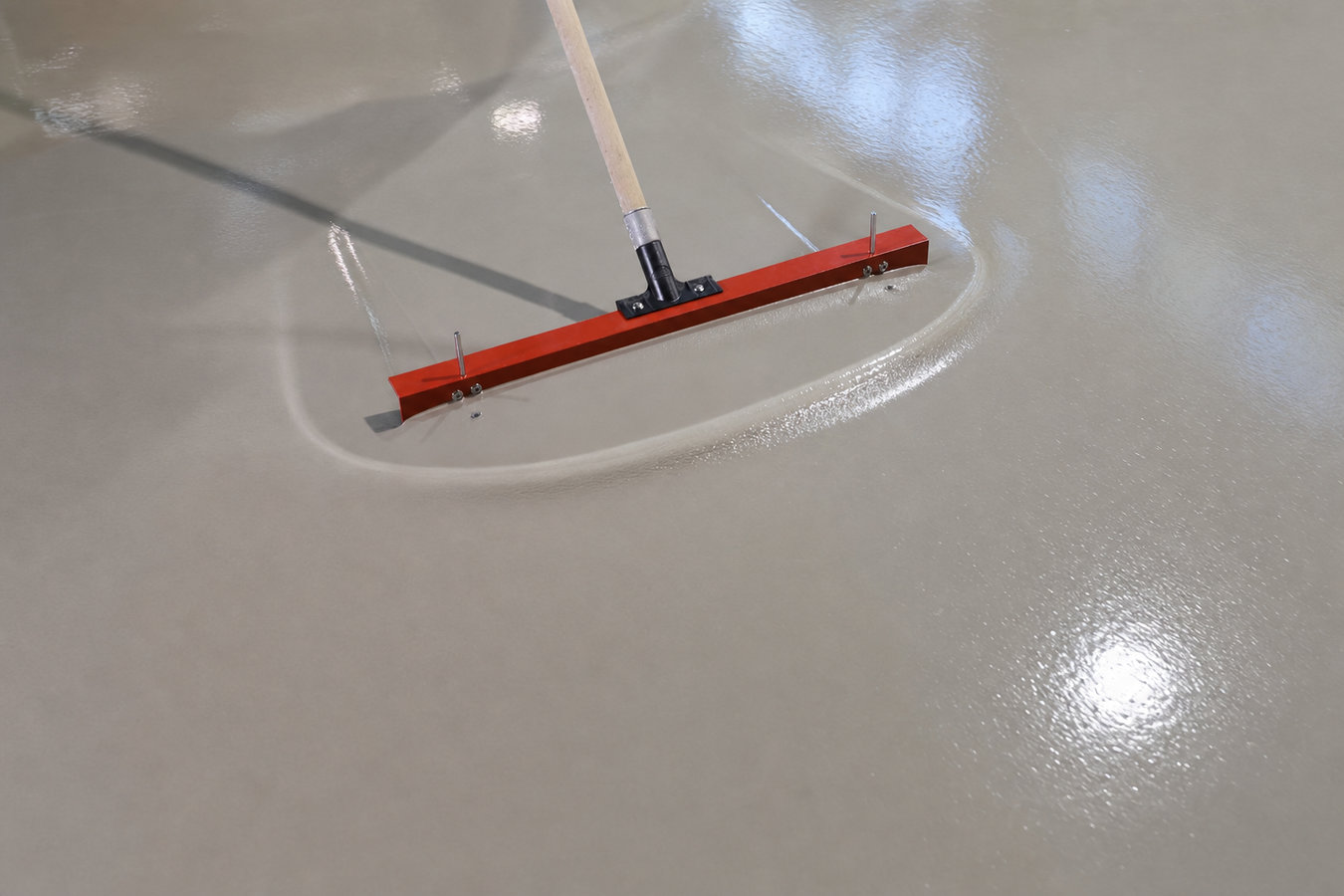
Self-leveling concrete in Benbrook is a specially mixed material that flows into dips and uneven spots on a floor and spreads itself flat without manual screeding - correcting settled slabs, preparing surfaces for new flooring, and restoring worn garage or basement floors, typically in a single day of work.
There are two main uses. The first is functional: correcting an uneven slab so that tile, wood, or vinyl plank flooring laid on top does not crack or come loose. If you have replaced flooring twice and it keeps failing, the problem is almost always the uneven surface underneath - not the flooring itself. The second use is decorative: a thin coating applied over an existing slab to give it a fresh, attractive finish - polished, stained, or textured - without the cost of demolition. If your surface also needs basic crack repair or grinding before the overlay goes down, that pairs naturally with concrete resurfacing and overlays as part of the same project.
Before any pour, a contractor should test for moisture and check whether the slab is still shifting. Those two steps are what determine whether the new layer will bond and hold - or start failing within a year.
If a chair wobbles on a hard floor even after you check the legs, or if you can feel a slope when you walk across a room in bare feet, your slab has likely shifted or settled unevenly. This is common in Benbrook homes built on clay soil, where the ground moves seasonally. A self-leveling pour corrects these dips so your floor feels solid and flat.
If your concrete surface looks like it is peeling in thin layers or has small pits that were not there before, the top of the slab has been damaged - often by freeze-thaw cycles or years of moisture exposure. Benbrook homeowners sometimes notice this getting worse after a hard winter. A decorative overlay resurfacing the damaged layer gives you a fresh, durable finish without replacing the whole slab.
If flooring you have had installed keeps cracking, popping up, or separating at the seams, the problem is almost always the floor underneath - not the flooring material. An uneven or slightly moving slab puts stress on whatever sits on top of it. Getting the slab leveled first is the fix that actually lasts.
A damp smell in a room with a concrete floor, or moisture beading on the surface in humid weather, means water is moving up through the slab from the soil below. In Benbrook neighborhoods near lower-lying areas or with older drainage, this is not unusual. Moisture needs to be identified and addressed before any overlay is applied - a good contractor will test for it before starting.
We handle self-leveling pours and decorative overlays for garage floors, basement slabs, interior rooms, and outdoor surfaces throughout Benbrook and the surrounding area. Every job starts with a moisture test and a full slab assessment before anything goes down. We check for cracks, soft spots, active slab movement from clay-soil pressure, and any moisture rising from below - because skipping those steps is how overlay jobs fail. The American Concrete Institute outlines best practices for slab flatness tolerances that guide our work on every leveling project.
For customers who want more than a flat floor, our decorative overlays can be finished with pool deck coatings and resurfacing techniques applied to exterior slabs, or combined with polished and stained finishes for interior spaces. We work through the options with you before the job starts so there are no surprises at the end.
Best for rooms with noticeable dips, slopes, or settled spots where new flooring needs a flat, stable base to sit on without cracking.
Best for slabs that are structurally sound but have a rough or worn surface - a thin coating restores appearance without a full leveling pour.
Best for garage floors, basements, and patios where you want a custom color and finished look at a fraction of the cost of replacement.
Best for slabs that test positive for moisture vapor emission - a vapor barrier layer is applied before the overlay to prevent premature failure.
A large share of Benbrook's housing stock was built between the 1970s and early 1990s, which means many slabs are now 40 to 50 years old. Slabs of that age have been through decades of clay-soil movement, North Texas heat, and occasional hard freezes - including the February 2021 storm that left visible surface damage on garage floors and patios across the area. That history shows up as settled floors, surface spalling, and moisture issues that have built up over time. Self-leveling overlays are a practical choice for these homes because they restore a floor to like-new condition without the cost and disruption of tearing out and replacing the entire slab. Homeowners in Fort Worth face the same combination of aging slabs and clay-soil challenges, and we bring the same moisture-testing and slab-assessment process to every job across the region.
Homes near Lake Benbrook and in lower-elevation neighborhoods tend to see higher ground moisture levels, which directly affects how well an overlay bonds to the slab. Moisture rising through concrete from below is one of the most common reasons overlays fail prematurely in this area - and it often goes undetected until the new surface starts to bubble or peel months after the job is done. Customers in Weatherford and other Tarrant County communities deal with similar soil and moisture conditions, and we approach every slab in those areas the same way: test first, then pour.
We reply within one business day. We will ask what room or area you are dealing with, what the floor looks like now, and what you are hoping to achieve. This helps us know whether an in-person estimate makes sense and roughly what kind of work might be involved.
We visit, walk the floor, take measurements, and check for cracks, soft spots, active slab movement, and moisture levels. In Benbrook, we specifically look for signs of clay-soil pressure from below. You receive a written estimate that breaks down what is included - no ballpark figures that grow after we start.
Before the crew arrives, you clear the room completely - furniture, rugs, appliances, everything off the floor. We handle the floor prep: cleaning the surface, grinding down high spots, and filling cracks that need attention. This prep work determines whether the new layer bonds and holds.
The self-leveling material is mixed and poured - it spreads on its own as the crew guides it into corners and edges. Most residential jobs finish in a single day. After curing, typically 24 to 72 hours, we do a final walkthrough with you, confirm the surface meets what was agreed, and walk you through care and resealing instructions.
We will come to your home, assess your slab, and give you a written quote with no obligation and no pressure to decide on the spot.
(817) 438-1248Moisture rising through a slab is the top reason overlays fail in this area - and it often goes undetected until the surface starts to bubble months later. We test every slab for moisture vapor emission before starting work. If moisture is present, we address it with a vapor barrier layer before the overlay goes down. That one step is what separates a floor that lasts from one that needs to be redone.
Benbrook sits on expansive clay that moves with every wet and dry season - and that movement is the main reason floors settle and shift here. We check whether the slab is still actively moving before recommending a leveling pour. Pouring over a slab that is still shifting without addressing the cause is money wasted. Our assessment catches that before any material is mixed.
Self-leveling material poured in extreme summer heat dries too fast to spread and bond correctly. We schedule pours for early morning in warm months and use warm-weather formulations when needed. The{' '} Portland Cement Association at cement.org notes that proper curing conditions are critical to long-term concrete performance - we apply that standard to every Benbrook job.
Many of the homes we work on in Benbrook were built in the same era - which means we have seen the specific conditions that 40- to 50-year-old Tarrant County slabs present: settled spots from clay-soil movement, surface spalling from years of freeze cycles, and moisture issues that have developed slowly over decades. We know what to look for before recommending an approach.
The combination of moisture testing, slab assessment, and proper weather scheduling is what makes the difference between a floor that holds up for 15 years and one that starts showing problems within the first year. That process is standard on every job we take on in Benbrook.
Restore a worn or slippery pool deck with a slip-resistant coating built to handle the wet conditions and summer heat that come with an outdoor Texas pool.
Learn MoreGive a structurally sound but worn driveway or patio a fresh surface with a polymer overlay - stamped, stained, or smooth - without the cost of full replacement.
Learn MoreSpring is the best season to pour in North Texas - book now before summer heat arrives and scheduling fills up.